Winery CO₂ capture

CO₂ capture for wineries — built for harvest, not factories

A portable CO₂ recovery system for wineries that arrives for harvest, captures the CO₂ you would normally vent during fermentation, and leaves once the season is over. Cut tank-purging gas costs, prove biogenic carbon capture, and turn fermentation into a measurable sustainability story for English wine.
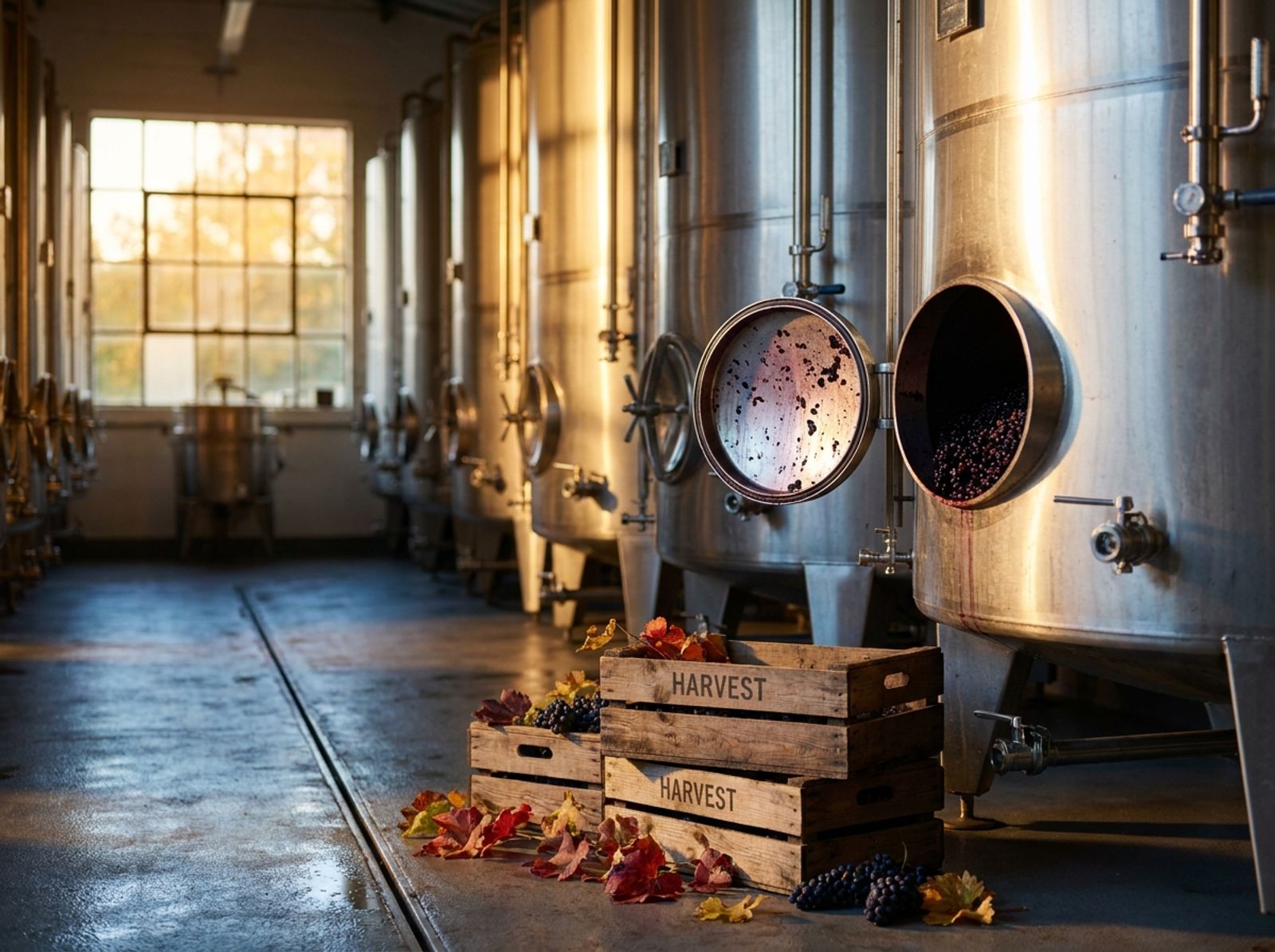

Stainless steel winery fermentation tanks during harvest with autumn light

The CO₂ problem

Wineries vent the most valuable CO₂ in the drinks industry

Wine fermentation produces some of the cleanest biogenic CO₂ available — and almost all of it goes straight to the sky. At the same time, wineries buy back fossil-derived bulk CO₂ for tank purging, blanketing and bottling. CO₂ recovery for wineries closes that loop.

Seasonal but intense

A winery's CO₂ is generated in a short, sharp window during harvest. A fixed-plant CO₂ recovery system rarely justifies itself — a portable, seasonal deployment does.

Premium-grade source gas

Wine fermentation CO₂ is exceptionally clean at source. With purification it is straightforward to bring to beverage-grade and reuse for sparkling production, blanketing and purging.

ESG pressure on English wine

Buyers, distributors and on-trade customers increasingly demand a credible sustainability story. Capturing biogenic CO₂ is one of the most tangible levers a winery has.

60 kg

CO₂ per hectolitre of wine fermented

Seasonal

Deployment, no off-season cost

Verra

Certified biogenic carbon credits

The solution

In-house CO₂ recovery for wineries — deployed for harvest, gone after

A modular in-house CO₂ recovery system for wineries that arrives ahead of harvest and is removed when fermentation is done. No permanent capital plant on a busy winery floor; no off-season costs; no compromise on what your fermentation hall is actually for.

Deployed for the harvest window

We size the unit to your tonnage and ferment volume, install on your tanks ahead of crush, and remove the kit when the season closes. Your footprint stays free for the rest of the year.

Beverage-grade for sparkling

Purified to beverage-grade specification — suitable for sparkling wine production, dosage, bottle counter-pressure filling and inert blanketing during racking and bottling.

Replaces purchased CO₂

On-site CO₂ generation eliminates bulk CO₂ deliveries during and around harvest. The same biogenic gas your tanks produce now does the work you used to pay for.

Biogenic carbon credits

Surplus captured CO₂ is permanently sequestered and registered as Verra-certified biogenic carbon credits. A real removal, on a real timeline, with audit-ready paperwork.

No capex, no fixed plant

Operated on a flexible seasonal subscription. No six-figure capital outlay, no fixed plant on the winery floor, no maintenance burden between vintages.

English wine, served by Kent

We are based in Wye, Kent — in the middle of England's most established wine region. Logistics, install and service are all delivered locally.

Sustainability

A net-zero winery story English wine buyers will quote

Sustainability managers, supermarket category buyers and DTC customers increasingly look at the carbon footprint of a wine before they look at the label. Biogenic CO₂ capture is one of the rare moves that strengthens both the P&L and the sustainability report.

Scope 1 reduction

Capturing fermentation CO₂ — and replacing purchased fossil CO₂ — moves real, audited tonnes off your Scope 1 inventory. It is a measurable carbon reduction, not a marketing claim.

Verra-certified biogenic credits

Surplus CO₂ that we permanently sequester earns Verra-certified biogenic carbon credits. That revenue can underwrite the cost of the system itself.

Buyer-ready reporting

We provide the capture volumes, purity records and credit certificates that drop directly into supermarket sustainability questionnaires and B Corp / Sustainable Wines of Great Britain (SWGB) submissions.

Based in Kent · serving the UK

English wine CO₂ capture, based in Kent

Cork & Capture is in Wye, Kent — at the heart of the South East's wine country. We deploy directly to wineries across Kent, Sussex, Surrey, Hampshire and beyond, and we understand what a vintage actually demands of a winemaking team.

FAQ

CO₂ recovery for wineries — common questions

Can wineries capture CO₂ from fermentation?

Yes — wine fermentation produces large volumes of biogenic CO₂ that can be captured, purified to beverage-grade and either reused on site (purging, blanketing, sparkling production) or permanently sequestered for carbon credits. Wineries are in many ways the ideal candidate because the gas at source is so clean.

How does winery CO₂ capture work seasonally?

Our system is portable. We deploy it to the winery ahead of harvest, install it on your fermentation tanks, capture and store the CO₂ during the active fermentation window, and remove the kit once the season is done. There is no off-season cost and no permanent footprint.

How much CO₂ does a winery produce?

Wine fermentation produces roughly 50–60 kg of CO₂ per hectolitre of wine — concentrated into the harvest window. A 50,000-litre vintage releases about 30 tonnes of biogenic CO₂, almost all of which is currently vented.

Can captured CO₂ be used for sparkling wine?

Yes. Captured CO₂ is purified and tested to beverage-grade standards on every batch — which means it is suitable for sparkling wine production, dosage, counter-pressure filling and inert blanketing.

How does this support a net-zero winery target?

Capturing biogenic CO₂ reduces Scope 1 emissions, displaces purchased fossil-derived CO₂ (a Scope 3 reduction), and — when surplus is sequestered — generates Verra-certified biogenic carbon credits. It is one of the most credible, audited decarbonisation steps available to a winery today.

How much does winery CO₂ recovery cost?

Cork & Capture is offered on a seasonal subscription sized to your fermentation volume. There is no capital cost, no permanent plant, and no off-season fee. Full commercial terms are on our commercial terms page.

Do you serve English wineries outside Kent?

Yes. We are based in Wye, Kent and serve wineries across the UK — particularly Kent, Sussex, Surrey, Hampshire, Essex and the wider South East, but we deploy further afield for the right vintages.

What is biogenic CO₂?

Biogenic CO₂ is CO₂ released by living organisms — the yeast fermenting your wine. It contains no new fossil carbon. Capturing it for reuse or sequestration is genuinely additional decarbonisation, which is why biogenic CO₂ is the gold-standard feedstock for credible carbon credits.

Ready to capture, not vent?

We work with wineries across the UK on portable, on-site CO₂ recovery. Tell us about your fermentation profile and we’ll size a system that pays back from year one.